Work means different things to different people. I only realized this when I started working across cultures. What counts as effort, ambition, or dedication isn’t the same everywhere.
Looking back, I realize how where I grew up and later worked shaped my ideas about hard work. Some habits I admired. Others I had to unlearn.
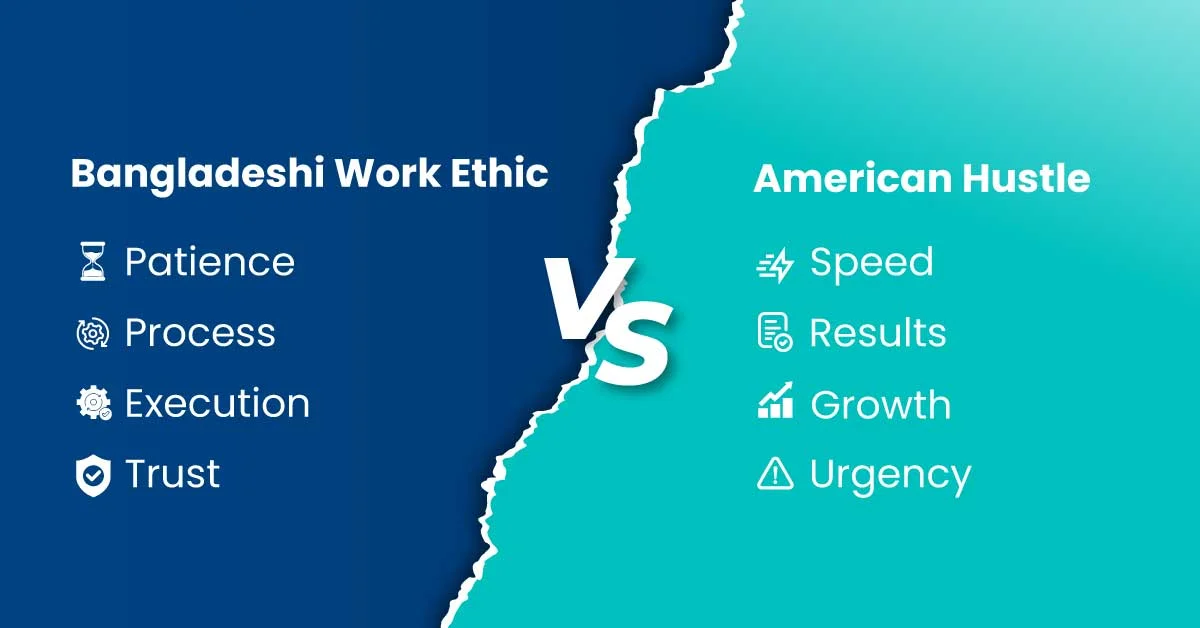
This perspective doesn’t declare one way right or wrong. It simply shows what I learned through experiencing both the Bangladeshi work ethic and the American hustle.
In my first job in Bangladesh, I quickly noticed how people worked. My manager expected me to follow instructions exactly. I had to learn patience. Things moved slowly, but they always got done.
I remember working on a project with a small team. Everyone had their part, and we had to wait for approvals at each step. At first, it felt frustrating. But over time, I saw why it worked. Each person made sure their part was done carefully before passing it on.
Loyalty mattered a lot. When someone promised to finish a task, everyone trusted that it would be done well. I learned that showing up and being consistent could earn more respect than doing something flashy.
Deadlines were real, but the focus was on getting the work right. I learned to check details, double-check steps, and make sure nothing was missed. Looking back, these habits shaped my understanding of effort. For me, this is the essence of the Bangladeshi work ethic.
When I first worked with teams in the United States, I felt a different energy. People talked about goals with urgency. They worked long hours. They pushed hard to meet deadlines.
I remember meetings where the focus was on speed. Ideas moved fast. People spoke up quickly. Decisions were made on the spot. It felt like everyone was trying to outwork the clock.
At times, it was inspiring. I saw people chase goals with real fire. They wanted results instantly. Many believed hard work and hustle led to success. They thought intensity would pay off.
But it was also different from where I came from. Here, work kept moving even after office hours. People checked their emails late at night. Weekends sometimes felt like extra workdays. Being busy seemed like a badge of honor. This pattern of relentless effort is what people refer to as American hustle culture.
At first, I admired this energy. Later, I saw how hard it could be on people. Some pushed so hard they skipped rest and breaks. Others quietly struggled with burnout and stress. I realized that this style could drive results, but it could also wear you down.
I still remember the first project where I worked with teams in both Bangladesh and the US. Expectations clashed in ways I didn’t expect. The slower pace in Bangladesh made me think people weren’t ambitious. In the US, I thought speed and long hours always meant efficiency. Both assumptions were wrong.
We misunderstood each other often. People in Bangladesh waited for approvals and followed the steps carefully. People in the US made decisions quickly and spoke openly. What I thought was “hard work” in one culture didn’t look the same in the other.
I made early leadership mistakes. I pushed teams to move faster in Bangladesh. I expected perfection and speed all at once in the US. It created tension and slowed progress.
Looking back, I realized how these assumptions shaped my leadership. I judged too quickly and acted too confidently. Over time, I learned that work ethic isn’t about speed, long hours, or visible hustle. It’s about understanding culture, context, and the people you lead.
A few lessons stood out about cultural differences in work ethic:
These lessons changed how I lead. I now pause before judging. I adjust patience and urgency to fit each situation. I respect different approaches and guide teams based on the situation's needs.
These experiences helped me see the broader strengths and challenges in each work culture.
Working across Bangladesh and the US taught me that both cultures have strengths and weaknesses.
In Bangladesh, the traditional work culture has many strengths. People value loyalty, patience, and careful planning. Teams follow processes and take responsibility for their work. This creates reliability and long-term stability.
In the US, modern hustle culture has its own advantages. People act with urgency, make decisions quickly, and speak openly about goals. They are comfortable taking risks and pushing for results. This drives speed and visible progress.
But both cultures also have limits. Traditional culture can be slow and resistant to change. Modern hustle culture can burn people out and sometimes overlook quality. Blindly copying one style does not work.
From my personal experience, the right approach is to adopt the strengths of both cultures. Be patient and plan carefully when it matters. Push for speed and bold decisions when results are urgent. Focus on the situation and your team rather than just one way of working.
Ultimately, traditional vs modern work cultures shape results. Each offers lessons we can use to lead better and build stronger teams.
Looking back, I see that hard work means more than long hours or constant hustle. It is about focus, responsibility, and doing the right work well.
I expect my teams to take ownership and deliver results, regardless of location. I value speed and careful thinking based on the task. Some projects need urgency. Others need depth and attention. I set clear priorities and trust teams to decide how to work.
For me, leadership means setting standards and living by them. I show the work ethic I expect. I guide teams, respect cultural differences, and build on their strengths.
Working across different countries shaped my global work ethic perspective. Seeing how people work has made me a better leader and helped me build stronger teams.
Working across countries taught me one clear thing: work ethic isn’t about speed or slowness. Both approaches can succeed in the right context.
Here are the key lessons I’ve learned that can help you work across cultures:
If you take these lessons to heart, you can work more effectively with people from different backgrounds. You’ll avoid misjudging others and lead in a way that respects their strengths





Entrepreneur | CEO of Ray Advertising & Policy Bear | Investor