For a long time, I ran my business without a clear funnel. I relied on referrals. Random leads. Occasional wins. Some months were good. Some were not. There was no pattern.
I thought hard work was enough. But, it wasn’t.
The real shift happened when I focused on building a sales funnel. Not a complex one. A clear one. One that guided people step by step. That single change brought stability. It brought focus and growth. That is when I understood the value of a profitable sales funnel.
In this guide, I will break down what I have learned from experience. The good decisions. The bad ones. And the lessons that actually move the needle.
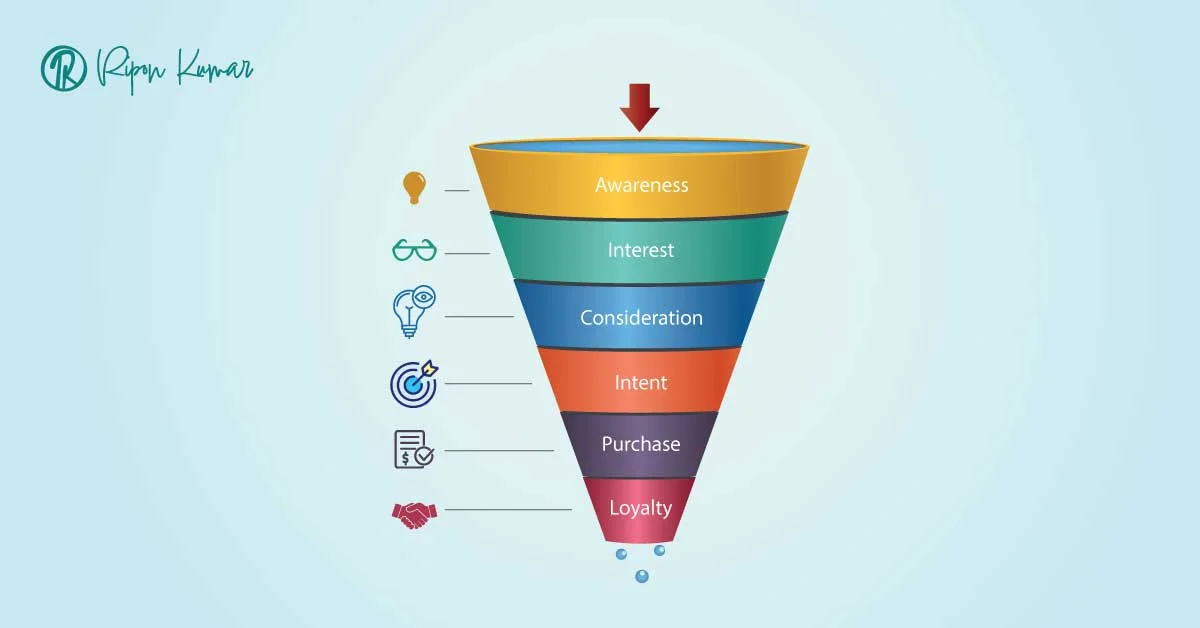
A sales funnel is the path people take before they become your customer. It starts when they first hear about you. It ends when they decide to purchase.
In real business, it is not a straight line. People pause. They leave. They come back. Some need time. Some need proof. A funnel helps guide them, rather than letting them drift.
Before I built a sales funnel, everything felt scattered. A message here. A call there. Nothing was connected. Once I put a simple funnel in place, things became clearer. I could see where people dropped off, what needed fixing, and what was already working.
Every business needs one because people do not buy on the first touch. They need to see you. Trust you. Understand you. A funnel supports their decision instead of pushing it.
I learned these stages through trial and error. Not from books. Not from courses. From real deals. Real losses and wins.
This is where people first hear about you. A post. A referral. An ad. A mention. Most will forget you. That is normal. The goal is not to sell. The goal is to be seen.
Some people will start paying attention. They read. They watch. They follow. They click. This is where trust begins. If your message is unclear, they leave.
Now they are thinking. They compare you with others. They check your site. They look for proof. This stage decides if you are taken seriously.
This is when signals appear. A demo request. A pricing page visit. A direct message. These are not random. They mean the person is close.
Here, interest becomes action. A deal closes. A payment is made. This is not luck. It is the result of the earlier stages working well.
This is where real profit is built. A second sale. A repeat client. A referral. Most businesses ignore this stage. That is a mistake. A profitable sales funnel does not end at purchase. It grows after it.
I used to follow every “rule” about funnels. Most did not work for my business. I had to figure it out on my own. Here is what I learned, step by step.
The first step was understanding exactly who we were helping. Not everyone and not anyone. Just the people who truly needed our solution. This focus made every next step easier and more effective.
Once the audience was clear, I ensured our message directly spoke to them. We used simple words and a clear promise; no fluff. People needed to understand immediately why we mattered and how we could help.
I tested different types of free offers, including guides, templates, and small tools. Some worked, some failed. I focused on what brought real attention and quality leads, not just numbers.
Most leads require multiple interactions before purchasing a product. I created a short, clear sequence of emails and messages. Each one taught, reminded, and built trust. Over time, this turned interest into action.
I experimented with smaller offers first, then bigger ones. Pricing aligned with value, not guesswork. People were willing to pay when they clearly understood the benefit.
I tracked each step, like emails, clicks, and form submissions. I adjusted what didn’t work and doubled down on what did. That is how a sales funnel became truly profitable.
Building a sales funnel is not magic; it requires clear steps, testing, and focus on results. But when done correctly, it turns strategy into real profit.
I have seen many teams struggle with sales funnels. Often, it is not a lack of effort, but common mistakes that are easy to avoid.
1. No clear target or persona
Some try to sell to everyone. That never works. You need to know exactly who your ideal customer is. Otherwise, your messages will be too broad, and people will ignore them.
2. Skipping nurture sequences
Leads rarely buy on the first touch. Skipping follow-up emails or messages is a huge mistake. Nurture them slowly, build trust, and show real value.
3. Ignoring data and analytics
Funnels generate data for a reason. Ignoring it means missing what works and what fails. Track every click, open, and form submission. Adjust based on results.
4. Too many steps, not enough clarity
Complicated funnels confuse people. Keep it simple. Focus on guiding them clearly from start to finish.
5. Chasing tools, not strategy
Many get excited about new software. Tools help, but strategy matters more. A clear plan will outperform fancy tools every time.
Avoiding these mistakes keeps your funnel focused, effective, and profitable.
Over time, I tested many tools. Some looked good, but slowed us down. These are the ones that truly helped me build a profitable sales funnel. Tools that worked well in real business are—
1. CRM Basics
I started with HubSpot CRM because it’s simple and free to begin. It lets me see every lead’s path from first touch to deal. I chose it over complicated ones because we needed clarity, not confusion. It grew with us as we scaled.
2. Email Automation
We moved to ActiveCampaign early. It lets us send automated emails based on audience behavior. If someone opened a page or clicked a link, ActiveCampaign would act. I chose it instead of basic tools like Mailchimp because it gave more control without being overly complex.
3. Chatbots and Messaging
We use Intercom for chat and messaging. It captures leads in real time and answers common questions. It felt more human than basic bots, and the team can jump in whenever needed.
4. Analytics and Tracking
Google Analytics shows where visitors drop off. Hotjar shows how they scroll and click. Together, they told me things I would have missed. I chose this combination because numbers with behavior paint the clearest picture.
When to upgrade tools
I don’t chase every new product. I upgrade only when we need real features that improve results. More tools without a purpose waste time and money. The right tools make a funnel work, not just exist.
A profitable sales funnel only works if you track the right numbers. Without data, everything felt like guesswork.
I check these metrics often. They show what is working, what needs fixing, and where to focus. They replaced guesswork with clear direction.
A sales funnel works when it is clear and focused on real customers. I have learned that chasing tools or shortcuts will not get results. What matters is understanding your audience, guiding them step by step, and learning from mistakes.
Successful funnels are never perfect, but they improve over time. Build, track, and refine carefully to stop relying on luck. You learn what works, what doesn’t, and how to turn interest into real sales. That is when a funnel becomes more than a process and a system that actually delivers results













Entrepreneur | CEO of Ray Advertising & Policy Bear | Investor